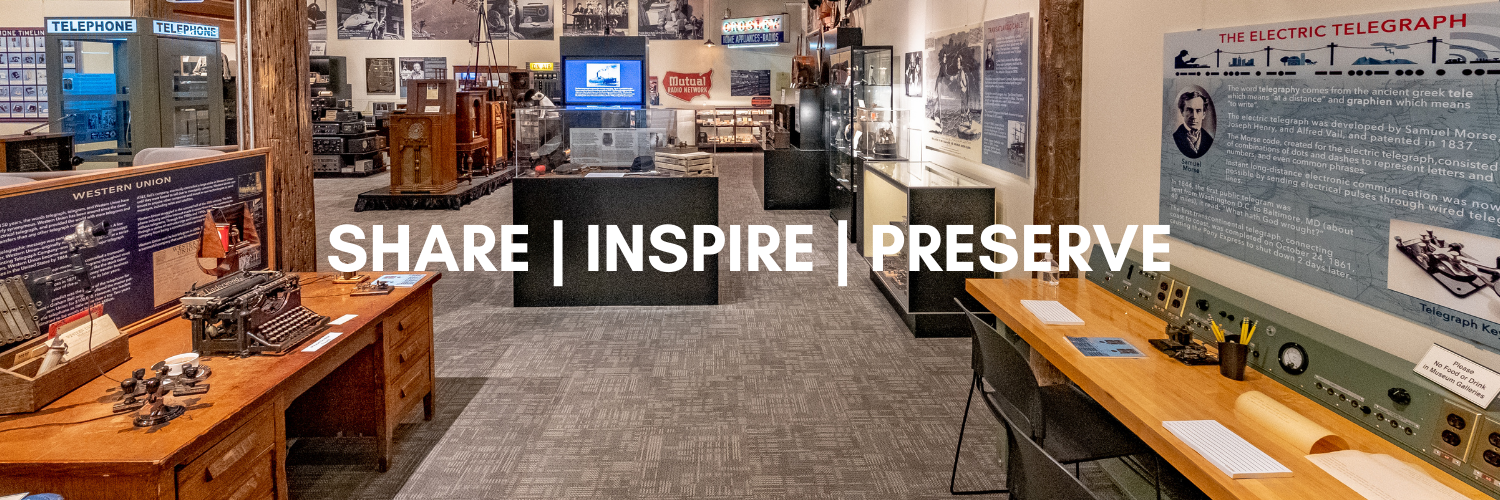
The Museum of Broadcasting houses one of the world's
finest collections of antique radio, television, and broadcast equipment. The
Museum has gained international recognition for its continuing efforts in
preserving and documenting the history of an industry that has made monumental
changes in the fabric of modern life. Please read our mission statement.
|
|
1912 spark-gap transmitter
|
|
The foundation of our programming is the
Joseph R. Pavek Collection containing hundreds of radio receivers,
transmitters, and televisions from the first half of the Twentieth Century.
Highlights include a working 1912 rotary spark-gap transmitter, similar to the
one used aboard the Titanic, crystal radios of the early Twenties, a
chronologically ordered collection of vacuum tubes (including several of the
original DeForest Audions), and one of the most extensive treasuries of radio
literature ever assembled.
|
|
Jack Mullin Collection
|
Other attractions include the Charles
Bradley Collection, representing more than sixty radio manufacturers from
the Twin Cities area, and the Jack Mullin Collection, documenting one
hundred twenty-five years of audio recording technology. From the earliest days
of the phonograph to talking pictures to the revolution of magnetic recording,
the Mullin Collection preserves the entertainment technology that has forged the
cultural achievements of the modern era.
|
|
1960s radio studio
|
|
We are dedicated to the preservation of these
collections and the creation of new opportunities for learning and discovery.
Children can actually create their own radio broadcasts in an authentic 1960s
era studio or participate in Saturday morning basic electricity classes. Amateur
operators can make world-wide contacts from our state-of-the-art Ham Shack, and
people of all ages can enjoy a variety of classic programs and interviews with
local broadcast pioneers.
|
|
Simple and graceful movements of the hands produce
and control the tone of the RCA Theremin. The young lady is playing
a note of rather high pitch (note position of right hand) and powerful
volume (controlled with left hand). |
|
Please stop in and play our original 1929 RCA
Theremin, listen to our Western Electric theater speakers, or perform live radio shows in our 1960s era studio.
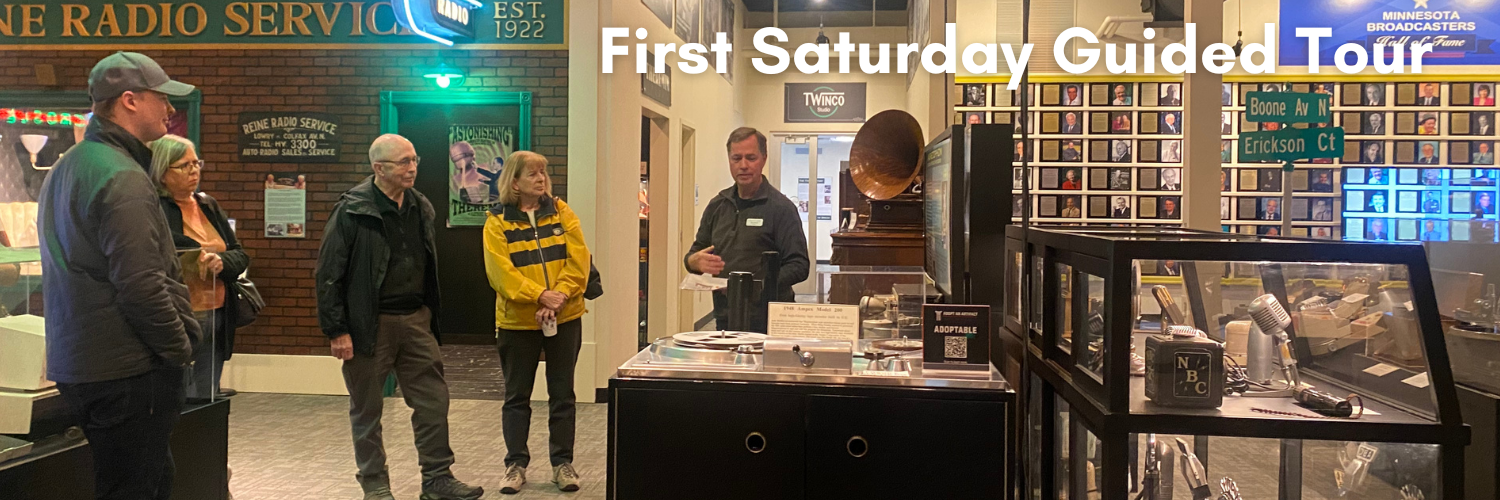
The Museum is located at 3517 Raleigh Avenue in Saint Louis Park, just
east of Highway 100, off the West 36th Street exit. We are open to the public
five days a week and are also available for special tours and evening meetings.
Call the Museum at (952) 926-8198 to make reservations for group tours or
just stop in for a visit. You can also send email to Steve Raymer at
snr@museumofbroadcasting.org (This is not an active link. You must copy and paste it. We apologize for any possible inconvenience this might cause. We are trying to reduce our spam email.)
Be sure to check out our links page for more
related sites on the web (and more pictures).
Here is a map
to the Museum of Broadcasting.
courtesy of Yahoo
ADMISSION
Adults . . . . . . . . . . . . .
. $6
Students or seniors . . . . . $5
HOURS
Wednesday - Friday . . . . . . 10:00 A.M. - 6:00 P.M.
Saturday . . . . . . . . . . . . . 9:00 A.M. - 5:00 P.M.
Closed Sundays, Mondays, Tuesdays, and Holidays
Copyright 2001-2010 Museum of Broadcasting |